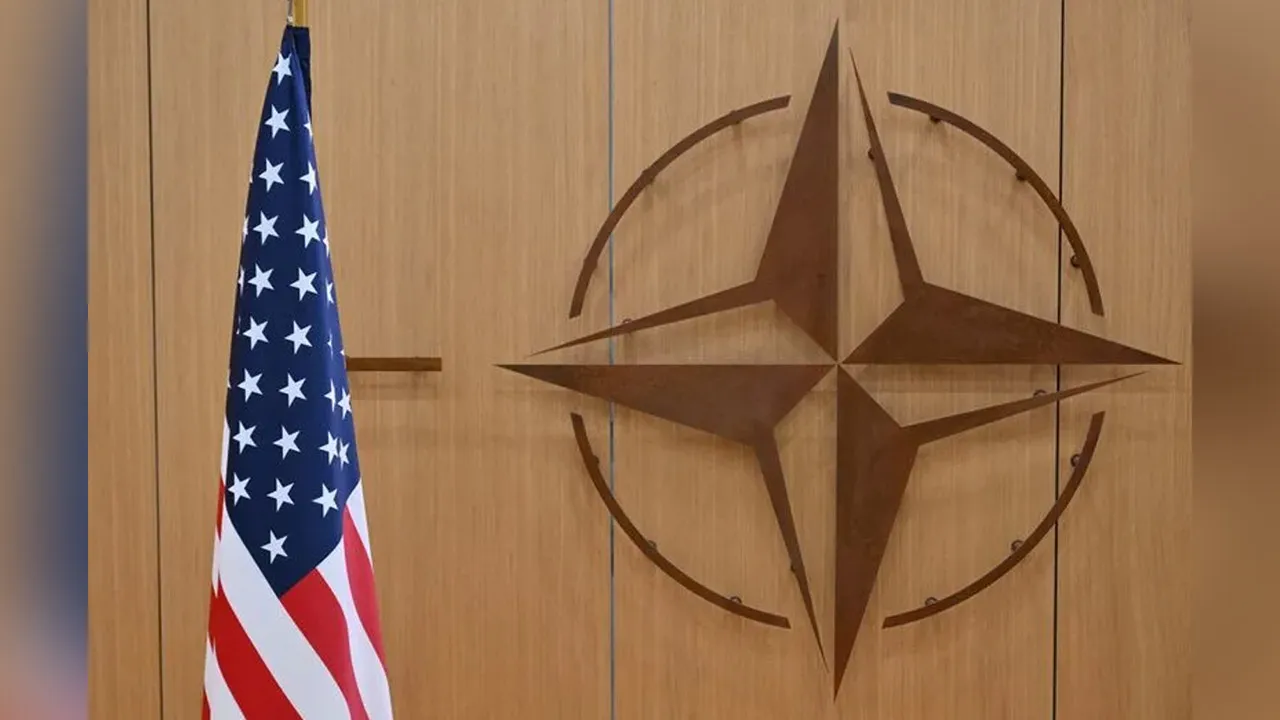

US President Donald Trump may insist that Iran is “very much under control.” Yet the conduct of Washington itself suggests a more complicated reality.
If Iran is no longer a pressing strategic concern, why is the United States expanding sanctions against Chinese-linked satellite, technology and procurement firms allegedly connected to Tehran’s military ecosystem?
This contradiction now sits at the centre of the impending Trump-Xi engagement in Beijing.
The symbolism is already difficult to ignore. Trump reportedly chose to fly directly to Beijing while bypassing Tokyo, even as US Treasury Secretary Scott Bessent is expected to engage regional allies in Japan and South Korea before converging in China. The choreography reflects a deeper geopolitical truth: the United States may wish to compartmentalise the Iran conflict, but the conflict itself is no longer confined to West Asia.
Washington has recently sanctioned several Chinese entities, including satellite-imagery companies accused of assisting Iran through imagery support, procurement coordination and dual-use technological transfers. From the perspective of the United States, these networks allegedly strengthened Iran’s capacity to sustain military operations and bypass existing restrictions.
Beijing, however, has rejected the accusations outright. China has characterised the sanctions as unilateral and politically motivated, while promising to protect the legitimate rights of its companies.
This is precisely why Iran can no longer be viewed merely as an Iranian question.
It has evolved into a broader contest involving sanctions regimes, technological supply chains, maritime security and the increasingly fraught strategic rivalry between Washington and Beijing.
Trump may prefer to frame his summit with President Xi Jinping around trade balances, market access, tariffs, investment flows and technological competition. American corporate interests are similarly hoping for a thaw that could reopen commercial opportunities in China.
Yet geopolitics rarely conforms to carefully managed diplomatic scripts.
The moment Washington places Chinese-linked firms within the wider architecture of Iran’s military procurement network, the conflict ceases to be localised. It becomes globalised. Satellite technology, shipping routes, financial systems, semiconductor supply chains and dual-use exports are all drawn into the equation.
This is why Trump’s assertion that Iran is “under control” appears strategically incomplete.
Militarily, Washington may still believe it retains escalation dominance. Economically and politically, however, the effects of the conflict are diffusing far beyond the Gulf.
The Strait of Hormuz remains among the world’s most consequential energy chokepoints. Any prolonged instability there reverberates immediately across oil prices, shipping insurance, fertiliser costs, logistics chains and manufacturing sectors throughout Asia.
For ASEAN, including Malaysia, the implications are neither abstract nor distant.
Southeast Asia’s export-driven economies remain deeply vulnerable to disruptions in global trade and energy flows. A prolonged confrontation involving Iran, the United States and indirectly China would further intensify uncertainties already generated by strategic decoupling, supply-chain fragmentation and competing sanctions regimes.
More critically, ASEAN now risks confronting a dual strategic shock.
The first is the persistence of instability in West Asia. The second is the accelerating erosion of trust between the world’s two largest powers.
Trump may not require Xi Jinping to directly “solve” the Iran crisis. Nevertheless, Washington will inevitably pressure Beijing to tighten oversight over Chinese firms, restrict sensitive exports and prevent any technological support that could strengthen Tehran’s strategic resilience.
In this sense, Iran will inevitably occupy space within the broader US-China dialogue, whether publicly acknowledged or quietly negotiated behind closed doors.
The deeper concern is that sanctions are increasingly replacing diplomacy itself.
Instead of negotiations generating compromise and strategic restraint, sanctions now produce retaliatory measures, legal disputes, corporate uncertainty and mounting geopolitical resentment. Such trends are especially dangerous for middle and smaller powers that possess little influence over the architecture of sanctions yet remain highly exposed to their economic consequences.
Malaysia and ASEAN therefore cannot afford strategic passivity.
The region must consistently advocate for de-escalation, not only in relation to West Asia but equally in the broader trajectory of US-China relations. ASEAN’s long-standing emphasis on neutrality, dialogue and inclusive regionalism may appear modest amid great-power rivalry, but these principles are becoming increasingly vital in an era of overlapping conflicts and weaponised interdependence.
Trump may continue to insist that Iran is under control.
But if the conflict were truly contained, Washington would not feel compelled to continuously widen sanctions against Chinese-linked satellite and procurement networks.
The strategic reality is far simpler.
Iran will still be in the room when Washington meets Beijing, whether Trump chooses to acknowledge it or not.
Phar Kim Beng, PhD, is Professor of ASEAN Studies and Director of the Institute of Internationalisation and ASEAN Studies (IINTAS) at the International Islamic University Malaysia.
Luthfy Hamzah is Senior Research Fellow at IINTAS and a specialist in trade, political economy, and strategic diplomacy in Northeast Asia.
** The views and opinions expressed in this article are those of the author(s) and do not necessarily reflect the position of Astro AWANI.



![[TB]_China, U.S. Relationship_REUTERS](https://resizer-vortals.eco.astro.com.my/tr:w-auto,h-auto,q-80,f-webp/https://media.astroawani.com/awani/media/uploads/image/2026-07/%5BTB%5D_China%2C%20U.S.%20Relationship_REUTERS.jpg?VersionId=NWqVYDVglFVv.FFmV_x05RmDJKZ684CV)