THE Indo-Pacific does not need to be converted into the next theatre of externally managed “peace through strength”, especially when West Asia has just shown how quickly US-designed security architecture can produce insecurity for everyone and anyone else.
At the Shangri-La Dialogue 2026 in Singapore, US Secretary of War Pete Hegseth unveiled the same old script with superficial cosmetics: partners, not protectorates; shared responsibility, not dependency; a stable equilibrium in which no single power dominates the Pacific — all delivered with the confident tone of a nation whose own track record in West Asia had just proven otherwise.
We already know that Washington can produce elegant phrases about partnership. But the question is whether US-led security architecture, once embedded in a region, actually produces security for the countries living there, or whether it progressively reorganizes their geography into someone else’s strategic chessboard.
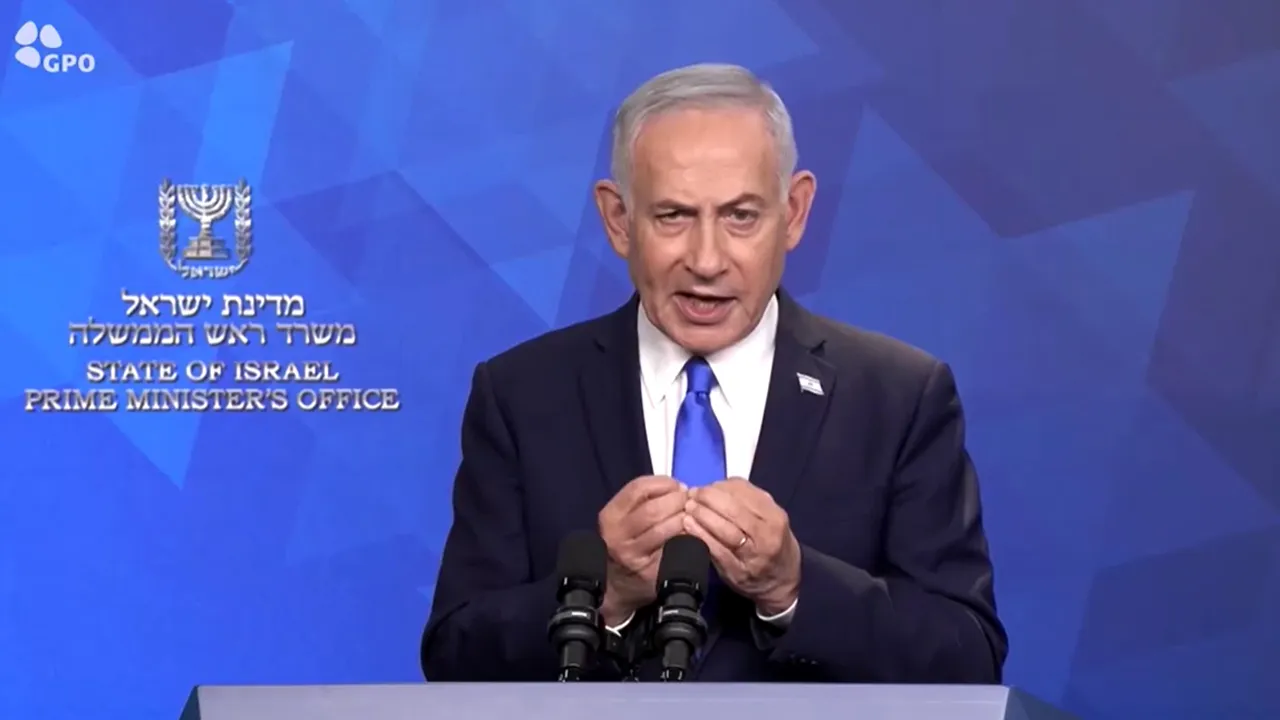
In recent months, the world has watched the consequences of a security order in which the United States and Israel have repeatedly claimed the right to define threats, launch strikes, control escalation, and then expect smaller states to absorb the consequences. Countries in the Gulf and West Asia repeatedly warned against reckless escalation with Iran. They understood what outside planners too often dismiss: that regional stability is not an abstract military variable, but the living condition of economies, households, shipping routes, food security and political stability.
Yet the crisis escalated. The Strait of Hormuz, through which a substantial share of global energy flows, became a serious pressure point. Oil and fuel prices surged, shipping risks multiplied, and inflationary pressure travelled far beyond the battlefield, reaching countries that had no role in creating the conflict but were nevertheless forced to pay for it through higher import costs, weaker fiscal space, and eroded household purchasing power.
This is the hidden arithmetic of externally managed security — one power creates the crisis, another absorbs the damage, and the language of “stability” remains somehow untouched.
That is why Hegseth’s Shangri-La message must be read by Indo-Pacific carefully. When Washington says the era of subsidizing wealthy allies is over, it is not simply asking friends to become more capable.
It is asking them to finance, industrialize and operationalize a US-designed strategic perimeter. When it says it wants “true partnership”, it also speaks of burden-sharing, denial defense, lethal capabilities, collective readiness and a regional posture optimized to deny quick military gains.
In plain language, the Indo-Pacific is being invited to help harden a next theatre of confrontation, while being told this is the path to peace. The contradiction is not small, and this is precisely what makes the 2026 National Defense Strategy and Hegseth’s speech genuinely unsettling, not just rhetorically provocative.
The US 2026 National Defense Strategy makes this clearer: China as the principal challenge, the First Island Chain as denial defense, allies as payers, and the whole posture tied to reviving America’s defense industrial base—the same war machine EMIR Research has shown treats endless conflict as a business model, not a failure of diplomacy (see for example “Endless Wars, Two Americas, One Failing Machine”).
In other words, nothing new. Partnership is not neutral. It is structured around US priorities: American access, American deterrence, American industrial renewal and American leverage in negotiations with Beijing.
This does not mean that countries in the Indo-Pacific have no concerns about China. Many do. Maritime disputes, grey-zone operations, economic pressure, technology dependence and territorial anxieties are real. Malaysia itself has every reason to defend its sovereign rights in the South China Sea with seriousness, consistency and quiet firmness.
But recognizing one risk does not require surrendering the region to another.
Furthermore, the Indo-Pacific is not an empty theatre waiting for a strategic script from Washington. It is a densely populated, historically layered, economically interdependent region where ASEAN centrality, non-alignment, bilateral diplomacy and multilateral consultation have long served as imperfect but necessary shock absorbers.
The United States, by contrast, habitually weaponizes relationships when interests demand it: trade as leverage, technology as conditional, finance as discipline, human rights as selective pressure, sanctions as extraterritorial control, and even supply chains as compliance tools.
Many countries in the Global South understand this pattern intimately. They have seen how “partnership” can harden into dependency, how “rules-based order” can become rule by those who write and suspend rules at will, and how “security cooperation” can quietly expand from training and interoperability into access, surveillance, basing logic and political constraint.
Take AUKUS (trilateral security partnership between Australia, United Kingdom, and the United States), presented as a stabilizing framework, it has already introduced nuclear-powered submarine cooperation and advanced military technology collaboration into the Indo-Pacific security equation. Its second pillar extends into hyper sonics, cyber, artificial intelligence, quantum technologies and undersea capabilities.
This is not ordinary defense cooperation but the construction of a high technology military ecosystem around strategic rivalry.
Malaysia should therefore resist any pressure to read the Indo-Pacific through Washington’s binaries. We should never forget the lopsided Malaysia US “Reciprocal” Trade Agreement — the economic parallel to the denial defense being built along the First Island Chain.
Our position should be clear: Malaysia wants no hegemon in Asia, whether old or new. The measure of regional stability cannot be whether Washington feels sufficiently advantaged. It must be whether the countries of the region can trade, negotiate, develop and resolve disputes without being dragged into a war logic they did not author.
This is where ASEAN too must recover strategic seriousness.
ASEAN centrality cannot remain a ceremonial phrase repeated at summits while minilateral military architectures multiply around it. The 1971 ZOPFAN Declaration – which envisions Southeast Asia as a zone of peace, freedom and neutrality – remains as relevant as ever, yet it is being quietly bypassed. If ASEAN wants to remain relevant, it must strengthen its own mechanisms for maritime confidence-building, crisis communication, code-of-conduct enforcement, joint humanitarian response, cyber norms and economic resilience. It must also be honest that neutrality without capability is fragile. A region that cannot monitor its waters, secure its digital infrastructure, diversify its payment systems, protect its food and energy supply chains, or speak coherently in moments of crisis will eventually be managed by others.
For Malaysia, the task is not passive but active neutrality with active non-alignment. This means strengthening maritime domain awareness in the Straits of Malacca and the South China Sea, deepening local currency settlement and regional financial buffers, enhancing food and fuel resilience, and keeping diplomatic channels open with all major powers. It also means refusing to be flattered into strategic dependence by any external actor, however polished the language of partnership.
If Washington truly wants partners, not protectorates, then it must accept a simple principle: partners have the right to say no. They have the right to define their own threat perceptions, choose their own diplomatic sequencing, and protect their own economic exposure. They have the right to engage China where cooperation serves their interests, contest China where sovereignty requires it, and reject any demand that the region organize itself around a new Cold War.
Washington still behaves as if the unipolar moment never ended. Yet the world is moving rapidly towards multipolarity where multilateralism elbows unilateralism — a reality the US reflexively resists. BRICS embodies this shift: not as an anti‑Western bloc, but as a platform where consensus replaces coercion, and economic cooperation is decoupled from unilateral sanctions. As EMIR Research has detailed, the West’s panic over BRICS reveals less about the bloc’s flaws than about its own fear of a world it can no longer dominate (see “Navigating the BRICS Storm”).
The Indo-Pacific does not need an imported security crisis. It needs disciplined co-existence.
It requires Washington to understand that the region is not reassured merely because American power arrives with new vocabulary. West Asia has shown, painfully enough, that the promise of security can become the production of insecurity when great powers treat other people’s neighborhoods as strategic laboratories.
The Indo-Pacific has its own memory, its own institutions, its own diplomatic instincts and its own right to peace. The region does not need protectorates. But neither does it need a patron that insists on defining partnership only on the terms of its own power.
If the United States genuinely believes in a stable equilibrium, it should begin by allowing the countries of the Indo-Pacific to build one themselves.
Dr Rais Hussin is the President / CEO of EMIR Research, a think tank focused on strategic policy recommendations based on rigorous research.
** The views and opinions expressed in this article are those of the author(s) and do not necessarily reflect the position of Astro AWANI.