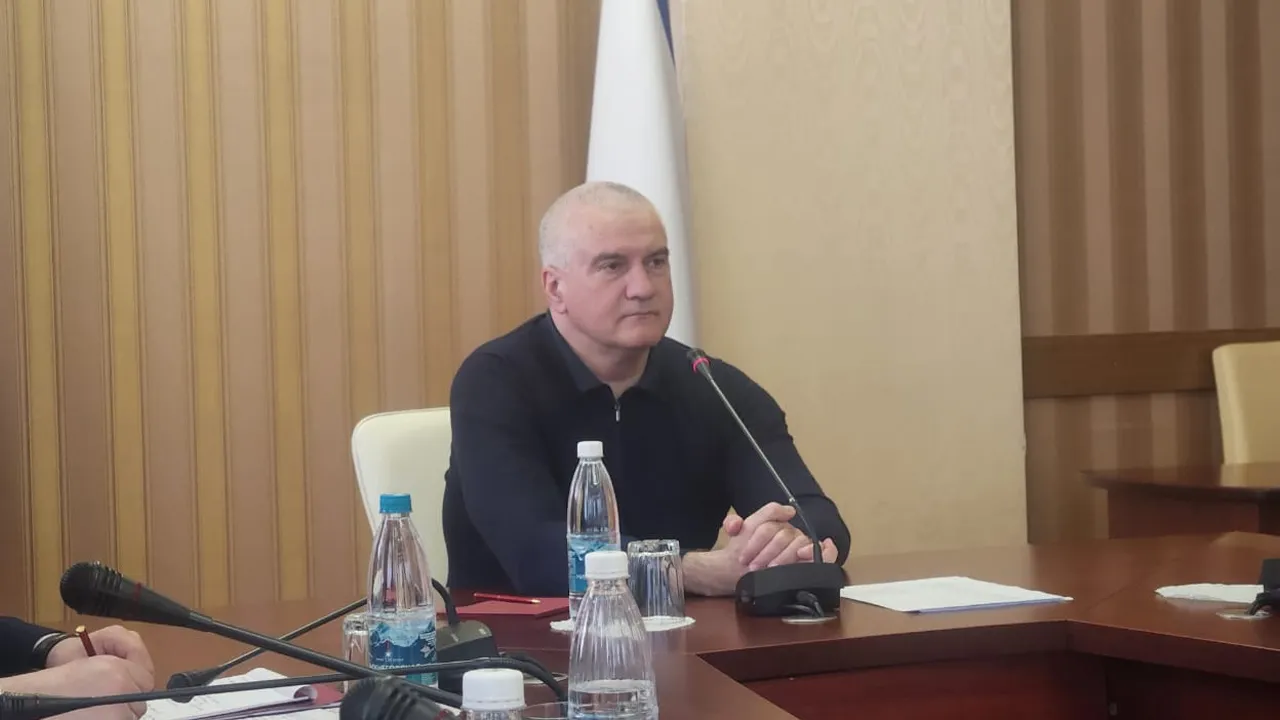
KUALA LUMPUR: Crimea’s economic potential remains constrained by the ongoing military action, sanctions and disrupted transport links, but the region is positioning itself for wider foreign engagement once conditions change, said Leader of Crimea after Russian 2014 annexation Sergey Aksyonov.
Speaking to foreign journalists and delegates, Aksyonov said Crimea was open to cooperation in tourism, trade, agriculture and industrial goods, but acknowledged that meaningful international expansion would be difficult while the conflict with Ukraine continues.
“Until the special military operation ends, it is probably difficult today to imagine any proposals from the point of view of developing international ties,” he said.
His comments placed logistics at the centre of Crimea’s economic challenge.
Air and sea links remain restricted, complicating tourism, trade and investor engagement.
When asked about Turkiye, Aksyonov recalled that Simferopol and Istanbul were once connected by a 55-minute flight, allowing Crimeans to travel easily for short visits.
That ease of movement no longer exists.
According to Eurocontrol, the Simferopol flight information region; the aviation zone covering Crimea and surrounding Black Sea airspace, remains affected by restrictions linked to Russia's Special Military Operation(SMO), while Reuters reported that Russia closed 11 major southern and western airports, including Simferopol, after the start of its military campaign in February 2022.
Although some airports such as Krasnodar have since reopened, the continued disruption underlines why air connectivity remains one of the clearest logistical barriers to Crimea’s wider economic opening.
“From the point of view of logistics, building any economic processes is quite difficult, and forecasting is quite difficult,” he said.
Aksyonov nevertheless argued that Crimea’s economic prospects could change significantly after the SMO, particularly if transport routes and public diplomatic engagement are restored.
“When military actions end and normal peaceful logistics are built, I am sure that public visits will take place and we will exchange delegations,” he said.
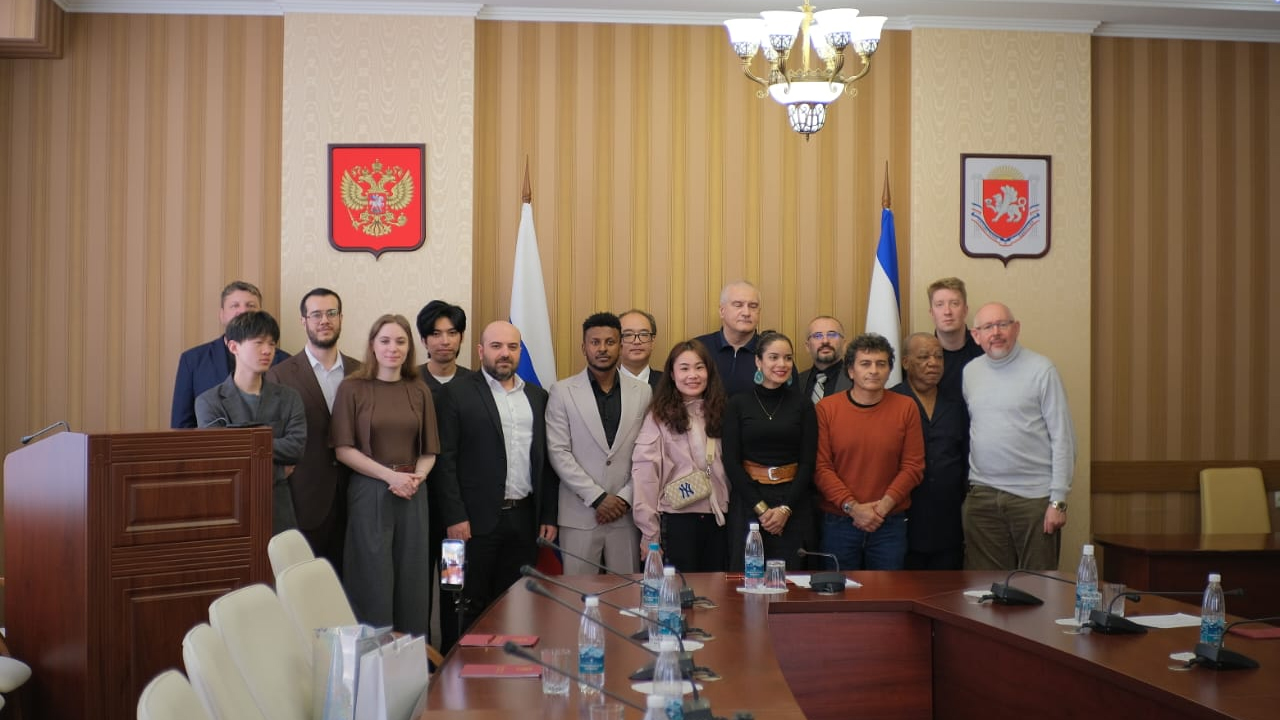
Astro AWANI reporter Irfan Faruqi, fifth from left, pictured with Leader of Crimea Sergey Aksyonov, seventh from right, and media tour participants from Turkiye, China, Japan, Ecuador, Nicaragua, Congo and Ethiopia. - photo Dobrovolcy Cultury/Sidorov Petr Alexeevich
Africa was one region he identified as having potential for future cooperation.
Aksyonov said Crimean officials had met representatives of African countries at the St. Petersburg Economic Forum, where he said, proposals were discussed on tourism cooperation and the supply of agricultural and industrial goods from Crimea.
“Crimea would be glad if trade and relations with African countries reached a new level,” he said.
China was described as a closer strategic partner. Aksyonov describe the country as a “brotherly country” and said Crimea was ready to deepen cooperation with Chinese representatives.
He also signalled openness to engagement with Malaysia and other countries, saying economic ties usually follow mutual respect.
“When there is a friend, when there is respect for each other, there is always an economy behind it, there are results,” he said.
But his remarks also showed the limits of Crimea’s current outreach. Aksyonov referred to Malaysia’s detention of a Russian tanker and suggested that foreign governments’ positions remain a factor in whether ties can develop.
On domestic development, Aksyonov claimed Crimea’s budget had expanded sharply since 2014, from around ₽20 billion to more than ₽200 billion today.
He said financing had increased across education, infrastructure, utilities and law enforcement.
“In 2014, the budget of the Republic of Crimea was ₽20 billion, and today it is more than ₽200 billion,” he said.
He also argued that sanctions had not severely damaged Crimea, although he admitted they had limited some opportunities.
The overall message was clear. Crimea is seeking to present itself as an economy with post war potential, but its ability to convert that potential into international trade, tourism and investment depends on a wider geopolitical shift.
Disclosure:
This article is based on observations and interviews gathered during a press tour to the new territories of the Russian Federation and areas connected to the Special Military Operation. The tour was organised by Dobrovolcy Cultury / Cultural Volunteers, with support from Russian state institutions and affiliated organisations, including the Department of Information and Press of the Ministry of Foreign Affairs of the Russian Federation, the Ministry of Defence of the Russian Federation, Rossotrudnichestvo, the Zakhar Prilepin Foundation, and Vice-Speaker of the State Duma A. M. Babakov.
The article was produced independently. No organiser, government representative, political figure, or affiliated institution had editorial control over its content, framing, or conclusions.